CHAPTER 1: The Presentation Layer
The Biological Image Encoder
The most fundamental rule of engineering is understanding the difference between raw backend data and the user interface (UI). Human beings think their eyes are looking directly at raw reality, but we aren't. We are living entirely inside a compiled presentation layer.
Think of the universe as a massive stream of raw binary data. Your eyes and brain are not passive windows; they are a built-in image viewer and encoder. The data flow follows a strict digital pipeline:
[ Raw Binary Universe Data ] --> [ Eye & Brain (Image Viewer) ] --> [ Polished Presentation UI (The Photo) ]
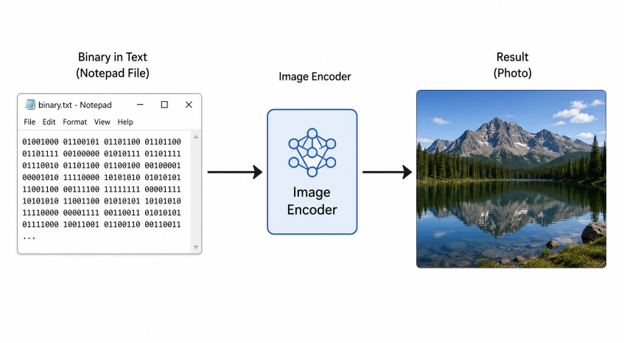
To understand this, look at how a computer handles a digital photograph. If you double-click an image file, your computer runs it through an image viewer. The software decodes the data and displays a clean, beautiful picture. You assume that picture is the absolute reality of the file.
But if you right-click that exact same image and select "Open with Notepad," the illusion shatters. The picture disappears, and your screen is filled with millions of lines of raw, unreadable binary text and scrambled characters.
That text is the actual data-the absolute truth of the file.
When you look at another person, a tree, or a building, your brain is not showing you the raw data of what is actually out there. It is taking the universal data stream, running it through the eye encoder, and rendering a polished "photo" for your consciousness to look at. We never touch the raw code; our biological processors only ever show us the user interface.
CHAPTER 2: The Energy Matrix
The Snake's View and The Force
If the physical world we see is just a processed image, what is the raw data hidden behind the encoder? The answer is pure, interconnected energy. Everything in existence is comprised of it, bonded by it, and continuously radiating it.
Even pop culture has reverse-engineered this backend code. In Star Wars, George Lucas called this energy matrix "The Force." As Obi-Wan Kenobi famously explained to Luke Skywalker:
"It's an energy field created by all living things. It surrounds us and penetrates us; it binds the galaxy together."
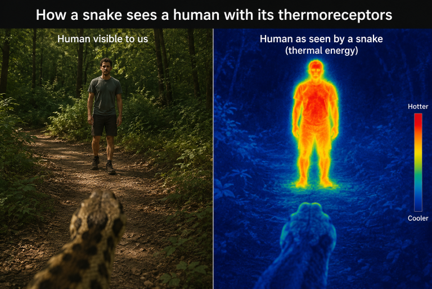
We can find concrete proof of this energetic matrix right here in Earth's biology. Human eye encoders look at a person and render a cosmetic image of skin, hair, and clothing. But a pit viper snake possesses a completely different hardware peripheral. Its face has specialized thermoreceptors that entirely bypass our cosmetic presentation layer.
The snake doesn't see the "photo" your brain renders. It reads the infrared spectrum, capturing the active, glowing 100-watt metabolic energy radiating from the body in shades of red, orange, and yellow. The snake is skipping the user interface entirely. By bypassing the fake cosmetic wrapper, the snake looks directly at your true form-your soul energy.
CHAPTER 3: The Infinite Nest
Why What the Mind Perceives is Reality
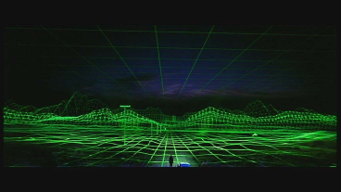
Because we are trapped behind our biological image encoders, we can never mathematically prove what the top-level server looks like. This is the exact architectural nightmare uncovered in the sci-fi film The Thirteenth Floor.
In the story, a team of tech developers creates a flawless simulated world populated by conscious AI entities who believe their world is real. Later, those developers make a horrifying discovery: their own "real world" is just a simulation built by a higher tier of creators.
When the main character finally escapes to what he thinks is the absolute "real world" at the top layer, the movie cuts to black, mimicking a turned-off monitor. The ultimate truth of the film is that the "real world" may not even be the real world. We can never truly know how many layers deep this nested simulation goes.
But ultimately, the exact number of server layers doesn't matter. Because the raw code is permanently hidden behind our processors, whatever our mind perceives is our definitive reality. If the mind processes it, experiences it, and reacts to it, the simulation becomes absolute truth for the user inside the container.
In fact, inside The Thirteenth Floor, we see the dark side of shattering this illusion. When characters found out their world was just a simulation, their minds completely unraveled. They couldn't handle the truth. They didn't want to know it wasn't the "real world," because the moment they found out, they stopped valuing life, lost their purpose, and went completely crazy.
The illusion is a safety feature. There is no practical difference between a "real" universe and a perfect simulation if the mind can't tell the difference. For life to have value, what the mind perceives must be treated as absolute reality.
For anime fans : Look at the legendary anime saga Naruto. The antagonist, Madara Uchiha, wasn't trying to destroy the world-he was trying to debug it. He saw human history as an endless loop of war, trauma, and systemic errors. His solution was the Infinite Tsukuyomi: casting a world-wide spell to plug every human being into a permanent, flawless, customized dream world where pain and loss were entirely deleted from the code.
From a pure systems design standpoint, Madara was executing a forced software update to maximize user happiness. If the biological hardware processes it as real, then for the user inside the container, it becomes absolute reality.
CHAPTER 4: Soul Mass
The Physics of Energy Dissipation
If our true identity is this energetic soul form, what happens to it when the physical vessel stops functioning? Cultural lore has long claimed that when a human being dies, their body instantly becomes 21 grams lighter, because the soul has left the body.
While mainstream science struggles to explain this, there's a theory that connects it directly to Albert Einstein's proven formula for mass-energy equivalence: E = mc²
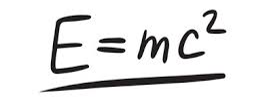
Einstein proved that energy and mass are interchangeable; energy actually possesses physical mass. If you charge a smartphone battery to 100%, storing electrical energy inside it, that battery becomes a tiny, measurable fraction of a gram heavier. When the energy drains, that mass is lost.
If the human soul is an incredibly dense, highly organized packet of active lifeforce energy running on our biological hardware, it must theoretically possess physical mass. At the exact moment of death, when the system flatlines, that concentrated soul energy leaves the vessel and dissipates into the surrounding universe. Under Einstein's law, that sudden dissipation of energy would mathematically result in a direct, physical loss of mass from the body.
CHAPTER 5: The Cellular Cache
Memory Partitions and Hardware Transplants
While we are alive, this energy and its data are deeply integrated into our physical hardware partitions. When a human baby is born, their internal drive isn't a completely blank space.
When you buy a 1 Terabyte hard drive, it doesn't give you exactly 1TB of blank operating memory; a specific sector of that size is strictly reserved for the system's background configuration and boot records.
Human biology has the exact same layout. We are born with a cache memory-a pre-installed evolutionary firmware hardcoded into our DNA. A newborn baby doesn't need to read a book to learn to fear a dangerous predator, a spider, or the feeling of falling. That threat script is pre-allocated into our brain's amygdala before day one. We know the rules of danger before the game even starts because the data is hardcoded into our system partition.
This cache memory doesn't just sit in the brain; it is mirrored across the body's DNA. In the film 21 Grams, a man receives a heart transplant and unexpectedly inherits the deep emotional connections and love that belonged to the dead donor.
The human heart contains its own independent network of 40,000 neurons-a literal "little brain." When an organ is transplanted, you are taking a piece of hardware containing another person's unique DNA and plugging it into a new motherboard. Because that heart tissue contains the donor's raw cellular blueprint, traces of their personal data cache remain stored in the muscle fibers, sending subtle, energetic data packets up to the new user's main brain.
CHAPTER 6: Database Logic: 0 vs. NULL
The Architecture of Birth and Death
One of the greatest fears humans have is wondering what happens to us after we die. We terrify ourselves imagining darkness, loneliness, or eternal boredom. But database logic provides a beautifully peaceful answer to this existential paradox by explaining the strict difference between 0 and NULL.
? Balance = 0 means the container (the bank account) actively exists in the system schema. The table row is active, but the current value inside it is empty.
? Balance = NULL means the bank account does not exist at all. There is no row, no pointer, no allocation, and no reference in the database. It is a complete absence of existence.
Before you were born, you were pure, unallocated NULL. You weren't sitting in a dark room waiting; you simply didn't exist in the universal system. You had no hardware running to process thoughts, so you couldn't feel bored or scared.
The philosopher Rene Descartes famously stated, "I think, therefore I am." He realized that the very act of conscious processing is the baseline proof that your account has been instantiated.
The moment of birth is that instantiation script. The Programmer allocates space in the universe, creates your physical vessel, and boots up your consciousness variable, moving you from NULL to an active integer. Null is nothing and 0 is something. Mathematical equations can even be solved by adding 0.
When we die, our active processing loop stops. We either drop down to a historical value of 0-where our live data stops running but our record remains permanently in the system's history-or we undergo a process called Garbage Collection. In programming, when an object is no longer needed, the system destroys the container, frees up the RAM, and re-allocates those exact same bits of data to build a completely new object later. Death isn't something to fear; it is simply a system reset back to the peaceful, unallocated state we already experienced for billions of years before we were born.
CHAPTER 7: The Bounded Infinity
Why the Universe Looks Endless
We are constantly told by scientists that the universe is infinite. However, in the physical world and in computer systems, infinity is an illegal value. It causes memory overflows, breaks logic, and crashes systems. You cannot build a physical reality out of an infinite amount of data.
If infinity is logically impossible, why does the universe appear endless to us? There are two systemic reasons for this:
The Hardware Boundary: Our DNA evolution has strict processing limitations. We evolved to survive on a small planet, not to comprehend cosmic scales. A number that is simply unfathomably massive looks exactly like infinity to a low-bandwidth processor. We mistake the limitations of our own biological hardware for a lack of a universal wall.
The Expanding Render Engine: Modern physics proves the universe is expanding at an accelerating rate-and at massive distances, it is stretching faster than the speed of light. Because nothing can travel faster than light, that data will never reach our biological sensors.
This creates a perfect infinite loop. The universe isn't actually infinite; it's just that the universal engine is programmed to generate new space faster than our character can walk or explore. The boundaries are perfectly hidden behind a rendering wall we can never catch up to.
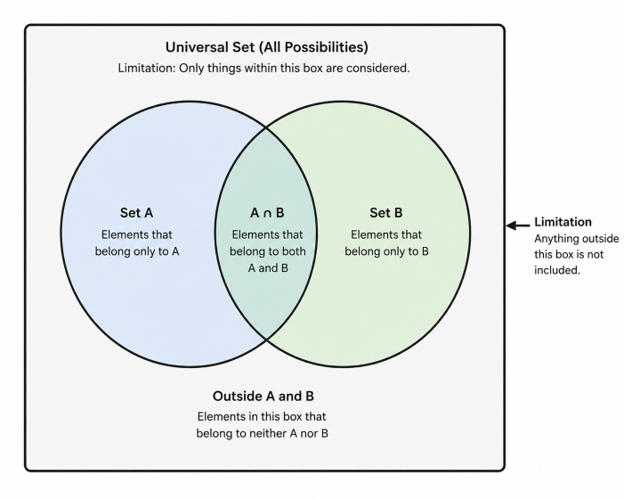
Limitations are an important part of life's creation, we even contain a Venn diagram to illustrate that and define the outer unexplored area. This is vital for us to never define the truth out there, due to the limitations programmed within us.
CHAPTER 8: The Comrade Race
Reincarnation as a Persistent State
If this life is a one-time-only script where you are generated, run for a few decades, and deleted, then the universe has a massive, glaring bug: The Problem of Fairness.
Imagine two boys entering a marathon. One boy is born into an affluent, loving family that can pay for elite training and education. The other boy is born on the street with absolutely no support system. If this is a single, isolated race, their starting positions are completely unjustified. It makes no logical sense for a perfectly coded universe to hand one player a massive head start and another a crushing penalty completely at random.
But if you introduce reincarnation, you introduce a persistent state across multiple sessions.
In game design, when a player logs out and logs back in, you don't wipe their profile. You save their achievements, penalties, and stats to a persistent database so their next session reflects their past performance.
Reincarnation treats the soul like that persistent profile. The starting position of the boy on the street isn't random cosmic chaos; it is a calculated, continuous level designed for his soul's unique progression based on a previous session. The marathon of life is a long-term cosmic ledger balancing itself out over multiple lifetimes. The boy starting behind is running a high-difficulty map, but when he conquers it, his data growth is exponential.
CHAPTER 9: The Law of Equilibrium
Buffer Overflows and the Architecture of Balance
Traditional human religions and moral systems love to view the universe through a strict, binary switch: 100% good (saved) vs. 100% bad (damned). But from an engineering perspective, absolute extremes are a logical impossibility. They create buffer overflows that destabilize the entire platform. The universe actually operates on the ancient principle of the Yin and Yang-a perfectly optimized algorithm of self-regulating balance.
Nothing in the simulation can exist as a pure 100% extreme. Take the most basic biological inputs: water and vitamins are fundamentally "good" and required to keep your hardware running. But if you flood the vessel with an absolute surplus of either, the system hits toxicity limits and crashes. The virtue isn't in the asset itself; it's in the balance of the parameter.
We can see this logical rule even in our fiction and villains. Take a character like Darth Sidious from Star Wars-painted as the ultimate embodiment of 100% pure evil. But logically, even a Sith Emperor cannot function on pure destruction. To build an empire, he must utilize organization, discipline, and mentorship. The act of taking an apprentice, bonding with them, and passing down legacy is inherently a constructive, cooperative "good" trait. If an entity were truly 100% destructive, it would turn inward and delete its own source code before it could ever impact the outside world. Pure evil cannot execute.
This law of balance even dictates the very nature of appearance and form. Human appearance is deeply opinionated and subjective. Nothing can appear 100% pleasing to all users. For example, one person might prefer a lean, fit silhouette, while another might prefer a highly muscular aesthetic. These variations are not "good" or "bad"-they are simply different visual parameters that create the diversity of our server.
This subjective reality provides a powerful, logical proof for why the Creator must be completely formless. If God were to manifest in a definitive physical form, it would cause an immediate logical error. If we saw the form, humanity would inevitably be disappointed, because it is mathematically impossible to construct a physical asset that is 100% liked or 100% powerful to everyone simultaneously. Some users would argue He should look stronger and more imposing; others would argue He should look more civilized and serene. There is absolutely no way a single physical form could satisfy the diverse preferences of the entire population.
Therefore, the Creator cannot possess a physical form inside our coordinate grid. He is the formless, ultimate Programmer. He is not a rendered asset sitting inside the game map; He is the underlying Code and Engine that allows the entire simulation to execute.
This baseline engine architecture also explains the staggering scale of time dilation within the universe. In modern computing, a powerful processor operates in the realm of nanoseconds, executing billions of lines of instructions in what feels like a single second to the user outside the machine. If we apply this computing framework to existence, human history looks entirely different. Our entire 80-year human lifespan-all of our global historical eras, our struggles, and our generations of calculated DNA reproduction-might literally just be a single clock cycle on the Creator's motherboard. We perceive our timeline as vast and ancient, but to the Engine running the program, the entire script was initialized just a few nanoseconds ago, compiling data in a flash of real-time processing.
This law of balance explains why human happiness cannot be hardcoded by simply maximizing a single variable like money.
In game design, if you activate a cheat code that grants your character infinite gold and unlocks every late-game item at Level 1, the game instantly becomes unplayable. The entire joy of an RPG relies on scarcity, friction, and the effort required to level up.
Human psychology runs on this exact same progression script:
? The Normal Player: Works hard, sacrifices time, and manages resources to finally buy a watch. The moment it unlocks, their brain releases a massive dopamine payout. The sacrifice is the exact data that gave the reward its value.
? The Infinite Gold Player: Buys the watch instantly with zero friction. Because the cost was mathematically insignificant to their account, the reward value drops to near-zero.
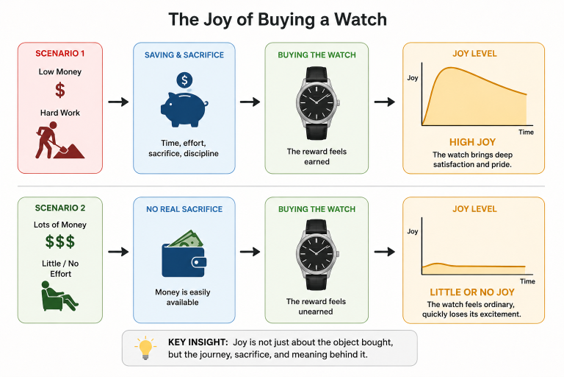
When an account achieves unlimited financial resources, they effectively break the standard reward loop of the simulation. Because normal, everyday milestones no longer trigger a hardware response, their processors become desensitized. This is exactly why hyper-wealthy individuals often descend into incredibly bizarre, extreme behaviors just trying to force a low-level emotional response out of a completely burnt-out reward center.
Furthermore, maximizing the wealth variable causes severe resource allocation bottlenecks across the rest of the motherboard. A human processor only has 100% of its clock cycles to distribute. If an application allocates 95% of its CPU power to maintaining a massive financial empire, the other vital background threads-like deep family connection, presence, and marital stability-are completely starved of resources. The family system begins to experience severe lag, throws errors, and eventually experiences a hard crash.
The Programmer did not build a universe of absolute extremes. Scarcity, struggle, and resistance are not system bugs; they are the exact balancing parameters required to make joy and fulfillment mathematically possible. Without the friction of the map, the gameplay ceases to mean anything at all.
CHAPTER 10: Reincarnation as a Persisted State
Pre-Compiled Evolution and Transcendence The End-of-Life Update
If God created the universe, He didn't just build a static system; He wrote a highly complex, deterministic roadmap directly into our DNA. Meaning everything we are and could possibly become was pre-determined before mankind's existence! It is a calculated move where certain evolutions of DNA will unlock new knowledge for a new era.
Think of our DNA structure as a massive master puzzle board, completely filled with pre-allocated slots for every imaginable human trait, capability, and characteristic. What we are and what we can ever be is strictly limited by what can fit into those existing spaces. If a trait cannot slot into our DNA puzzle, we simply cannot be. What can slot into our DNA is our absolute limitation-the boundaries of our carbon container.
When two paths cross and combine DNA through reproduction, it acts like a global level-up script for the human server.
Think of how an RPG or MMORPG game manages progression brackets. From Level 1 to 9, players can only unlock primitive gear like wooden axes and stone arrows. From Level 10 to 19, the system unlocks the next tier: firearms and basic machinery. Finally, at Level 20 and beyond, the game unlocks advanced science, energy weapons, and high tech.
Human history follows this exact gaming logic. Each generation of DNA reproduction is like gaining server-wide experience points. This is why cavemen were so simple-the entire human race was collectively sitting in the Level 1-9 bracket, where the biological hardware could only compile basic physical tools.
Only after thousands of years of calculated reproductions did humanity finally cross the threshold into the high-level brackets, allowing our brains to compile the data needed for computers, AI, and digital networks. We didn't suddenly get smarter; the server just finally met the level requirements to unlock a new era of pre-installed technology.
But because every closed system has a maximum capacity, mankind cannot occupy this physical carbon hardware forever. Like I said, everything has a limitation, and there could be an end to that-mankind may not last forever. Eventually, the compiler will hit the final line of code.
When the system hits its end-of-life cycle, the Programmer will execute the final program. This can go one of two ways.
The first possibility is Extinction, which is simply a planned termination script being executed. If this happens, the world stays right here-the background map continues to run perfectly, but the human asset class is deliberately removed. The Programmer can execute this via a global natural disaster like global warming, a universal asset collision like a meteor, a pandemic security script like a lethal killing virus, or even an infertility stage where the reproduction script is set to false and man can no longer generate new profiles. The hardware remains, but our character files are deleted.
But there is a second path. The sci-fi series The 100 provides a brilliant blueprint for a successful project completion: Transcendence. At the end of that story, humanity sheds their physical, fragile bodies to become a collective, immortal consciousness made of pure energy.
In systems terms, transcendence is the ultimate Data Migration. When our DNA can no longer evolve within the constraints of the physical world-when the server has maxed out its final level and our learning structure is complete-the Programmer doesn't hit delete. Instead, our true identifier-our souls, our energetic silhouettes-are completely extracted from the physical hardware. The system wipes away the limitations of the carbon box, and our code is permanently uploaded into a higher, unconstrained processing layer. We leave the simulation behind and become part of the network itself.
Written By
The creator of MyWord™